In eerily related stories this week, the United Nations approved a ban on "public defamation of religion" while across town in Manhattan the Lab Gallery announced they were removing the "nude, anatomically correct, chocolate sculpture of Jesus Christ" from their Holy Week display at the Roger Smith Hotel.
In spite of the timing and proximity of the two events, whether they are related is unclear. In fact, the hotel housing the display made the decision to cancel it after influential Catholic clergy had threatened to boycott the hotel.
Nobody questions that there would be world-wide rioting with good and bad Muslims alike trampling each other in the streets while dirty bombs creep closer to US borders by the day if someone were to sculpt a naked chocolate Muhammed. But it's ok, because that won't happen since after nearly a year and a half of trying, Arab nations have managed to band together on an issue enough to pass an international law limiting freedom of speech.
The way it works is that governments of all 192 UN member countries are required to have and enforce laws restricting freedom of speech by banning "public defamation of religion." The resolution is not specific about what constitutes public defamation, and does not specify guidelines for acceptable laws or punishment for the offense. Sanctions would be appropriate for nations that fail to comply.
In the "I will know it when I see it" vain, it seems likely that the Danish cartoons uproar would be used as precedent. While some in the Muslim world called for death for the artist, and probably as many people related to the publishing as possible, other influential leaders denounced these calls.
Following the publication of the cartoons, a group of Danish Imams dissatisfied with the government's response, embarked on a tour of the Middle East to spread the inflammatory material and fire people up. To pad their case, they added three additional offensive images, including one depicting the Prophet Muhammed engaged in bestiality with a donkey, along with the original cartoons. The extras were said to have been sent anonymously to Muslims on the web with intent to intimidate, insult, and/or enrage.
Western nations who cast losing votes against the UN resolution complained that it excessively restricted the freedom of expression, and that it focused too heavily on Islam. One has to wonder if the Cardinal who complained about the chocolate Jesus had been aware of the passage of the international ban this week if he might have been able justify death threats against the hotel management instead of simple boycott.
However, the U.S. has had a surprisingly muted role in the spectacle. Even at the height of the controversy while the cartoons were top news, the only news outlets in the US that would print the cartoons were two University newspapers in Illinois, one of which resulted in at least one firing on campus. The US Congress has not proposed legislation opposing public defamation of religion, and the only free-speech case in the Supreme Court currently has more to do with education than religion.
The self-censoring in a country known for sensationalizing anything that gets ratings was not for fear of international sanctions. It probably was not for fear of violating any federal or state laws since the publication would most likely be protected under the first amendment. Defamation, however, is a recognized exception to the first amendment, although that has traditionally referred to false statements about individuals and has not yet been tested in terms of defamation of religion.
But do we really need an international law against defamation of religion? It seems like people in the US do a decent enough job of avoiding defamation of religion out of civility - if you don't have something nice to day, don't say anything at all. Or more realistically, the dominant force in our society known as capitalism, enforces a de facto ban on especially controversial positions because they can result in boycotts at best and vandalism, litigation, or acts of terrorism at worst.
Showing posts with label liberal. Show all posts
Showing posts with label liberal. Show all posts
Saturday, March 31, 2007
Saturday, March 24, 2007

Wednesday, March 21, 2007

Tuesday, March 20, 2007

Monday, March 19, 2007
Tuesday, March 13, 2007
Don’t Ask, Don’t Tell Applies to More than Just Homosexuality
The Chairman of the Joint Chiefs of Staff, Marine General Peter Pace, on Monday said in an interview with the Chicago Tribune that he believes homosexuality is immoral and on par with adultery. Several gay rights groups as well as a handful of congressmen and women responded swiftly by condemning the remarks and calling for an apology.
As a gay man who grew up in the Bay Area and now lives in San Francisco, I wonder what all the hoo-ha is about. I was raised to be intolerant of intolerance but also to embrace this great nation’s diversity, which often means accepting the beliefs and values of those who were raised in a different culture. While I obviously disagree with Mr. Pace’s assertion that homosexuality is immoral, I absolutely respect his right to his personal opinion. I am more than happy to agree to disagree with him on this one.
I also find it fascinating and telling that Mr. Pace has placed homosexuality on par with adultery and further that he supports the military’s Don’t Ask, Don’t Tell policy on moral grounds. The implication of these remarks is that it is fine to engage in immoral behavior so long as you keep it secret. This mentality exposes the double-standard behind all too many Washington scandals.
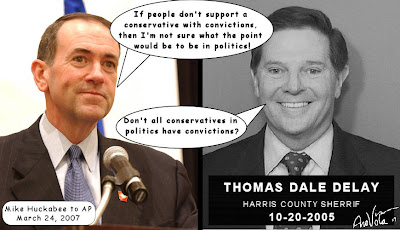
Recently former Speaker of the House Newt Gingrich acknowledged that he was having an adulterous affair even as he aggressively pursued former President Bill Clinton for his moral indiscretions. Applying Mr. Pace’s standards, Mr. Gingrich’s affair was also immoral but would have been ok had he not decided to make it public. Or consider attorney and witch-hunter Roy Cohn who famously crusaded against gay rights in the early 80s and never considered himself “gay” in spite of the fact that he had sex with men and ultimately died of AIDS, which he caught from a male prostitute. Where then does one draw this fine line?
In one of the more bizarre news stories this week, Israel has recalled its ambassador to El Salvador after he was caught literally with his pants down in a compromising sexual situation that can only be described as “kinky.” Israel’s decision to recall Tsuriel Raphael citing “conduct unbecoming of a diplomat” is probably appropriate given that the man was apparently drunk while engaging in bondage and discipline activities involving sex toys on the grounds of the embassy. However, if he had opted to engage in the same activities in the privacy of his own home or a hotel room, I would think it is his business. Don’t ask. Don’t tell.
There is an assumption that all adults have certain sexual proclivities, and a sense (true or false) that our constitution guarantees consenting adults the right to explore these proclivities in the privacy of our own homes, regardless of any personal moral judgments that other people or even the prevailing culture may impose. Maybe you are into sex toys, as in the case of Mr. Raphael, or maybe you are into snorting Crystal Meth and having sex with male prostitutes as in the case of felled evangelist Ted Haggard. Under the mindset of “Don’t Ask, Don’t Tell,” a clear disconnect arises between moral values one professes outwardly versus the inalienable right to engage in immoral behavior privately.
I would argue to Mr. Pace that there is one important distinction between homosexuality and adultery, and that is who gets hurt. As one who has in the past been cuckolded by a gay lover, I have a great deal of sympathy for the victims of adultery. Yet, I fail to identify victims of consensual homosexual relationships. This is not to say (for those reading this who lump gays in with rapists and child molesters) that homosexuals cannot also be involved in behavior that does hurt people, but simply “being gay,” feeling attracted to and/or engaging in consensual sexual activities with members of the same sex, does not harm anyone.
On that note, I am also relieved to see Mr. Pace has lumped gays in with adulterers, a group toward which social conservatives and even Americans in general are notoriously forgiving. I’ve grown accustomed to seeing far-right politicians placing homosexuality alongside polygamy, bestiality, pedophilia, and even necrophilia all too often while engaging in their own adulterous relationships. Even the military only recently (July, 2006) updated its own stated policy of considering homosexuality a mental illness, a designation rejected by the American Psychiatric Association in 1973. The American military’s official view now is that homosexuality is a form of mental retardation or social disorder, but only on par with bed wetting or a fear of flying.
Although I do hope the military will ultimately repeal its ban on gays serving openly, which I believe damages the military overall, and I of course hope that prevailing sentiment toward gays will continue to become more accepting, I cannot bring myself to be offended by Mr. Pace’s remarks. Given the history and context of how gays have been viewed and treated in the mainstream, I am more than happy to accept Mr. Pace’s statement that his personal opinion is that gay sex is immoral and should be kept private. While I may not agree with what Mr. Pace has said, I will defend to the death his right to say it.

Subscribe to:
Posts (Atom)
